Regenerate or retouch an image with a mask in Fotifai
When to regenerate a whole image and when to fix only one area with a mask: how it works, how many credits it uses, where it is available and its limits.

Simulated case: an ecommerce agency with catalogs of 500 to 2,000 references. API batches, team, quality control and when Business or Enterprise makes sense.
Simulated case with illustrative figures, not a real customer. The agency, its clients and its numbers are invented to explain a workflow. Nothing below is a measurement or a testimonial, and the volumes are assumptions you would replace with your own.
An ecommerce agency running several large catalogs does not have the problem of a shop with 30 products: it has a problem of volume, traceability and control. This article sets out how the work could be split across API batches, a small team and tiered review, and why that volume points to Business or Enterprise.
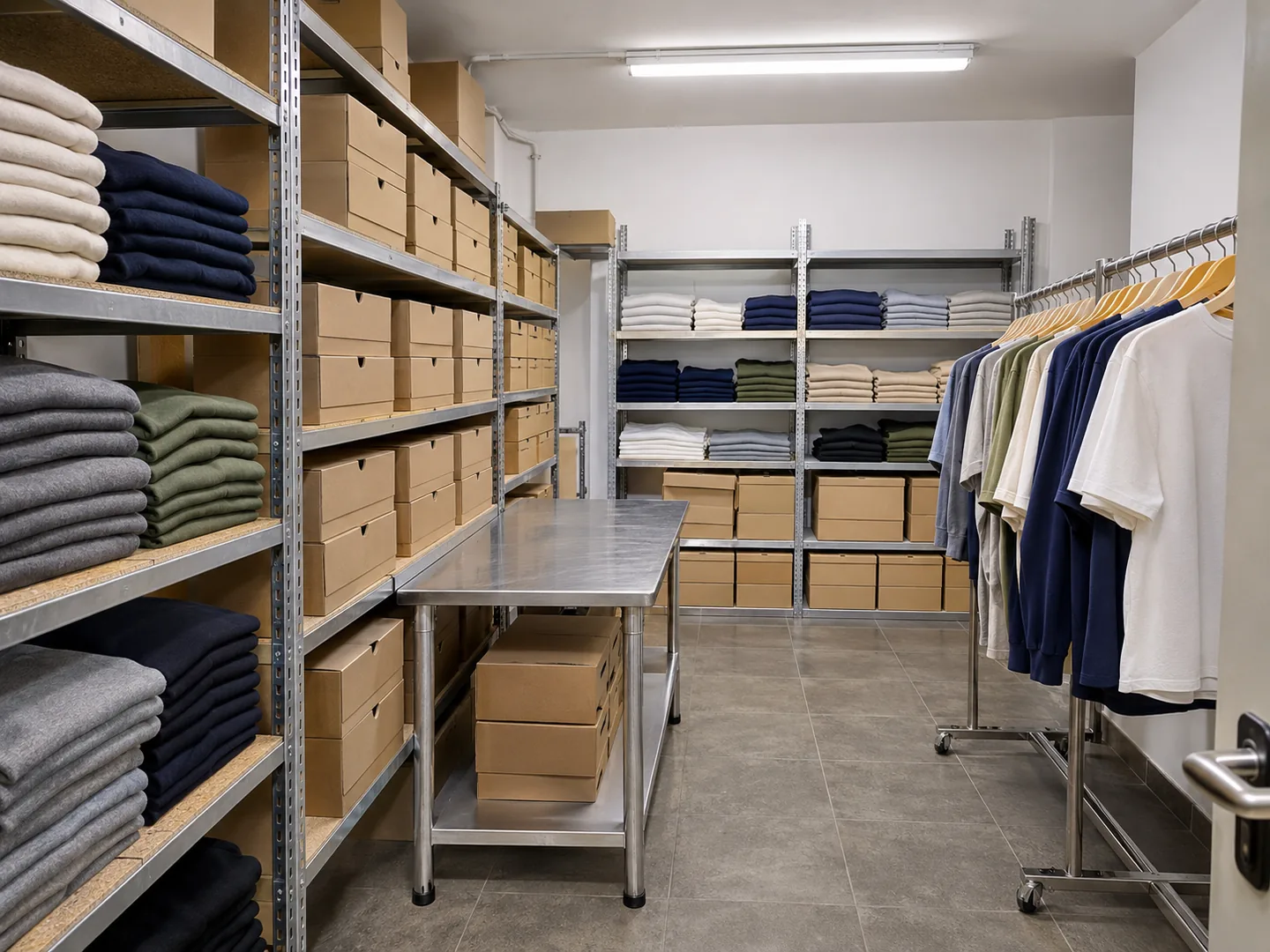
Fotifai has a web dashboard, a WooCommerce plugin and a public /v1 API with a key. The PrestaShop and Shopify integrations are in preparation: for the homeware client you work through the API or by downloading images, not with a module. More on integration in WooCommerce plugin, API and MCP.
X-API-Key header. Labelling them by client helps trace who launched what.POST /v1/products with name, SKU and category, then POST /v1/products/:id/photos to upload up to five photos (10 MB per file).POST /v1/images/transform with the type (product_enhance for the white background, background_removal for the transparent one, scene_generate or model_swap with the avatar), the product and, where relevant, the model. It returns a job identifier.GET /v1/images/jobs/:id until the job finishes or fails. If credits run out, the API answers 402 with what is missing; GET /v1/credits/balance returns the balance.GET /v1/products/:id/published returns the ordered list to sync with the client's shop.One organisational point: the platform groups products, avatars and credits by account, not by client. To keep clients apart you use conventions (SKU prefixes, one key per client) or separate accounts, and you split credits between clients in your own cost accounting. The pricing page announces 3 team seats on Business and agreed terms on Enterprise: ask how that fits your division of work before you commit.
Assumptions: every reference goes through product_enhance with 8% redos, 1,350 get a transparent version, 300 star references get 2 on-model photos with 200 redos, and 150 mask retouches.
| Job | Credits per job | Jobs |
|---|---|---|
product_enhance | 2 | 4,500 + 360 redos |
background_removal | 1 | 1,350 |
scene_generate | 3 | 600 + 200 redos |
inpaint | 2 | 150 |
At today's costs the total is around 13,770 credits over 12 weeks (if they change, recalculate from the table), or about 4,600 a month. Business includes 1,000 credits a month (€99): three months add up to 3,000 and about 10,800 would be missing, which is 8 packs of 1,500 credits at €69.99 each. Pro (500 credits) will not do: per the pricing page it includes 100 API calls, far below 4,500 products. At this volume the sensible move is to ask for an Enterprise quote (custom, unlimited images per the website) and compare it with Business plus packs. Current prices are in Fotifai pricing and credits.
Time (illustrative): about 4 days of development for the batch script with retries and logging; 2 days per client to audit the starting photos; and roughly 45 hours of review split between two people over 3 weeks. We give no generation speed figures: measure real throughput on the first batch of 200 references and plan from that.

Fotifai's automatic check looks at technical aspects of each image and does not replace your judgement (more in quality check before delivery). The agency needs its own human layer:

If the project went well, the agency would do in weeks what would take months by hand, with a consistent background across catalogs and a record of what was approved and why. As a hypothesis, not a promise: what saves the most is cut-out and upload time, not review time, which does not disappear. The sales effect for each client has to be measured.
It fits agencies that renew photos for many references with a uniform background, and have someone to write a script and someone to review. It does not fit if every reference needs bespoke studio photography, if the client demands an already published PrestaShop module or if you cannot spare the hours to review.
Free and paid. There is a Free plan (10 credits a month, with limits), Basic (€19), Pro (€49), Business (€99), a custom Enterprise and credit packs sold separately. The beta is private, by invitation: request access on the home page. To see how it stands against another tool with an API, read Fotifai vs Claid.ai, and for the cost of the traditional alternative, how much does it cost to photograph a catalog.
Accessed on 15 November 2026.
Pick 20 references from one client, run them through the API or the dashboard and measure how many images your team approves first time. Private beta, by invitation.
Try FotifaiWhen to regenerate a whole image and when to fix only one area with a mask: how it works, how many credits it uses, where it is available and its limits.

Why phone photos drag down a product page, what you can improve when shooting and what AI can actually correct, including where it stops working.
How Fotifai's product mode turns a phone photo into a catalog image: cleaning, removing or replacing the background, what each job costs and its limits.